1.5.1 “I 'm staying!”
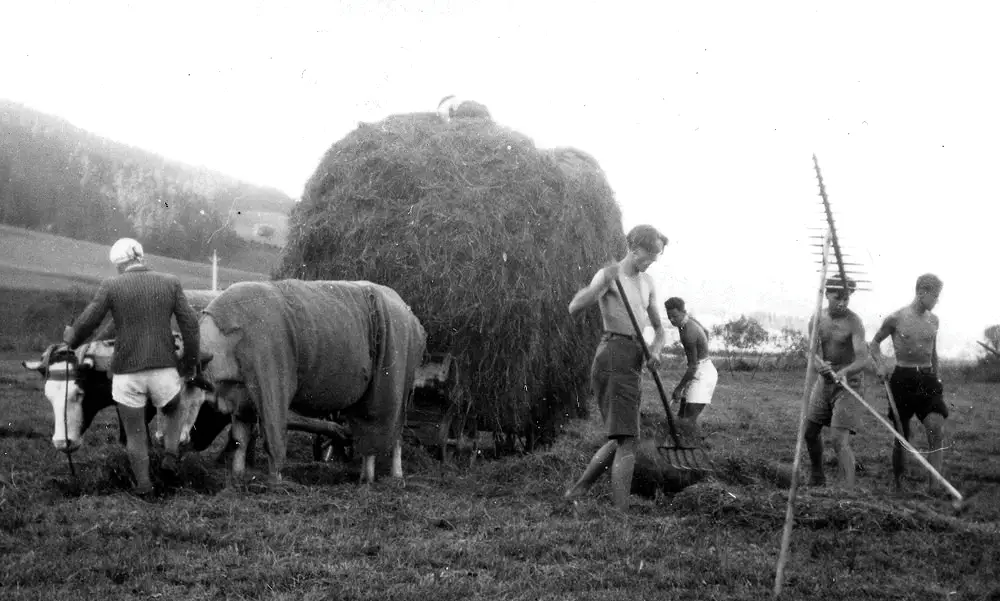
High school students participate in the haymaking at Les Geymonds during the war (Association Mémoire du lycée polonais - Polish High School Memorial Association).

With the Treaty of Versailles, Poland regained its independence. France, ravaged by war, was short of labour, while in Poland millions of people were looking for work. France and Poland sign an emigration agreement. Between the wars, almost a million Poles settled in France.
Following the First World War, Poland regained its independence. France, ravaged by war, was short of labour to rebuild the country, while in Poland millions of people were looking for work.
This second phase of emigration in the first half of the 20th century was mainly economic. With the signing of an emigration agreement between France and Poland in 1919, hundreds of thousands of farmers, miners and workers came to work in French mining regions and the agricultural sector. Between 1919 and 1931, the Polish population grew from tens of thousands to half a million, making Poland the second-largest foreign nationality in France after the Italians.
The Vercors was affected by this new wave of immigration. The massif was already home to Swiss and Italian craftsmen, farm workers, foresters and metalworkers. In the 1930s, many Poles started a new life in the Vercors’ mountain pastures. These new immigrants were often farmers in their own country. Unhappy with the work they had been offered in the French coalfields, many offered their services to property owners in Isère and elsewhere.
High school students participate in the haymaking at Les Geymonds during the war (Association Mémoire du lycée polonais - Polish High School Memorial Association).