
- Home
- Le foyer des libertés
- Before
- Poland’s troubled history
Poland’s troubled history
Partition, annexation, unification: all these factors instil a deep patriotism in the hearts of Poles that nothing can extinguish. Although they are sometimes forced to leave their homeland, the spiritual bond with the land of their ancestors is such that they never forget their roots. France, the home of the Enlightenment, was their destination of choice.
The history of Poland begins in the 10th century, under the reign of Mieszko I and the Piast dynasty. It was during this reign that the Polish sovereigns converted to Christianity. In the Middle Ages, Poland rapidly became a regional power, while regularly trying to escape the influence of the Holy Roman Empire. From the 12th century onwards, the Kingdom of Poland had to fight against the Teutonic Knights, who had colonised Prussia and part of Pomerania.
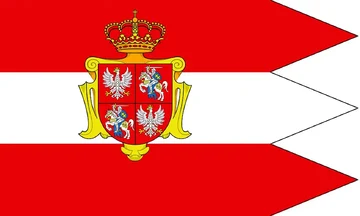
The country reached its apogee in the 15th and 16th centuries, under the Jagiellonian dynasty, following the union of the Kingdom of Poland and the Grand Duchy of Lithuania to form the Polish-Lithuanian Commonwealth, the largest state in Europe at that time. During the 17th and especially the 18th century, the Commonwealth was involved in numerous military conflicts that caused it to lose a large part of its territory, mainly due to the expansion of the Russian Empire. At the end of the 18th century, after three partitions, the Polish-Lithuanian Commonwealth was divided between Prussia, Austria and Russia.