6.6.1 “The liberation of Paris was a great joy.”
—Lucjan Owczarek, student. Account on loose leaf, undated.
Our search for weapons was finally successful. On 15 August, two German lorries with weapons, munitions and Polish personnel from the German units left their barracks in Enghien and headed for the prepared drop-off point, the Borys garage in Alfortville. Borys, a member of POWN, also had strong links with the local Resistance… We were mobilising all our members. I was particularly concerned about the Paris-Saint-Paul section. Paris was criss-crossed with retreating German soldiers, makeshift vehicles, horses and various old machines. This was clearly the beginning of the end. Everyone was very impatient and wanted to take action. The only order I received was to wait…
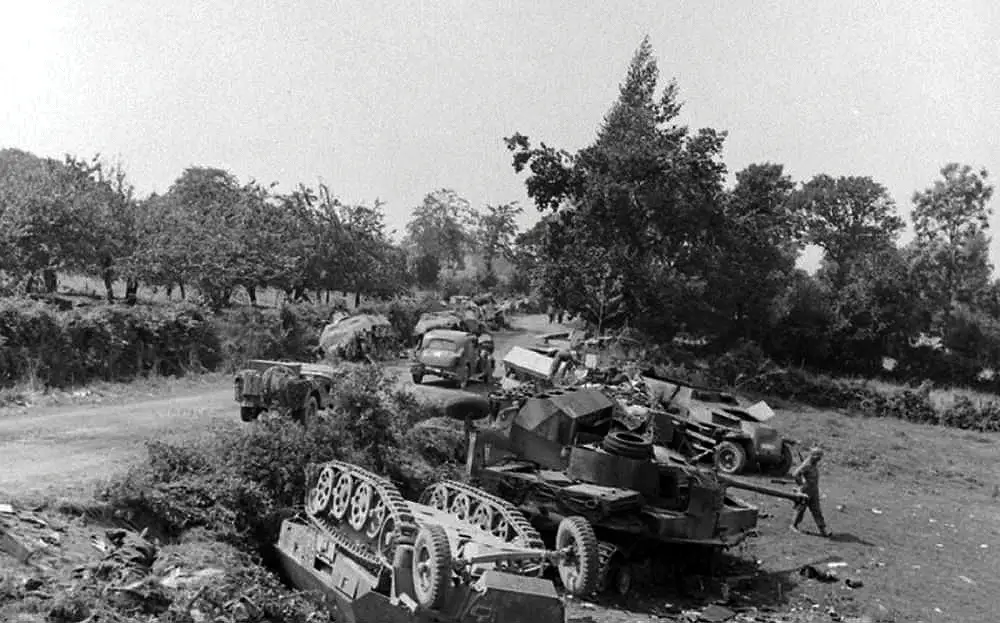
But soon we heard shots being fired here and there. Barricades were being built out of furniture and cobblestones from the damaged streets. In Saint-Paul, I saw a damaged German tank. The French flag was flying over the town hall. Lots of people were in the square and in the streets. We passed the bewildered German soldiers on guard at Orsay station. Moving between gates and entrance ways, we headed for the Polish embassy, whose occupation was one of our priorities. We arrived at the embassy. It was closed up. There was no one there. We noticed that the neighbouring buildings were already occupied by the Resistance: the Ministries of War and Labour, Invalides and the Maison de la Chimie. The Germans were entrenched at the Invalides train station…
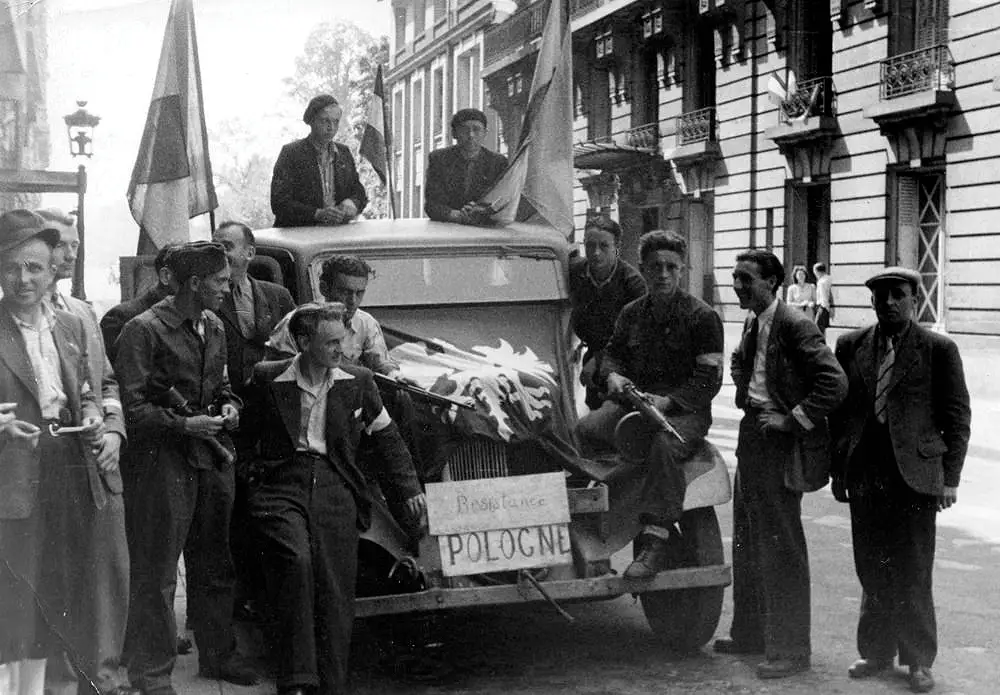
I decided to bring at least some of the defectors from Alfortville, with their weapons, to Paris. We had to take advantage of the general disorder and the Germans’ indecision. I knew that there were German patrols and checkpoints at the entrances to Paris. The operation was risky, but feasible. I asked for the vehicle to be painted white and red so that it would be clearly visible. The truck would thus be driven under Polish colours. The repainted vehicle passed a German checkpoint without incident. The occupants of the cab and the passengers lying down in the back were all armed. In accordance with instructions, the Polish House at 7 Rue Crillon was the first target to be liberated…
I saw the first French tank at the Town Hall and the madness that had taken hold of people. I saw the enthusiasm, the fear that made people take down the flags, I heard the most unbelievable gossip. And then happiness….
The outcome. From the very first days of the fighting, all the members of the POWN had been mobilised. We had twelve sections in the region with 333 members, including 16 women. We did not suffer any losses. We occupied all the buildings that had housed official Polish services or belonged to Poles. The liberation of Paris was a great joy for us, but was tempered by the thought of what was happening in Warsaw, of the struggle that was going on there without any hope of effective help from the West, and of the Polish problems, the seriousness of which we were aware.