
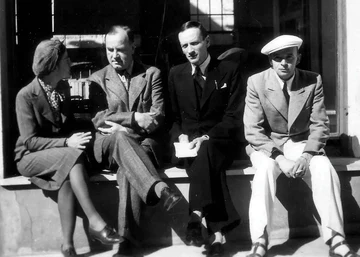
6.1.1 “Military resistance was organised very early on.”
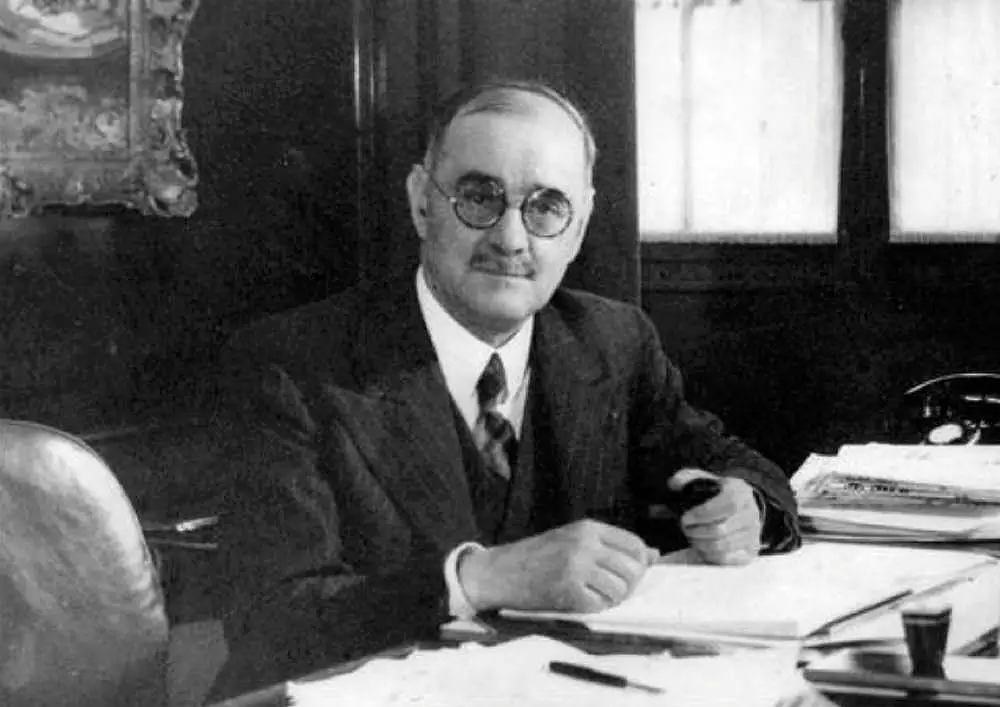
—Wacław Godlewski, headmaster. National archives, 72 AJ 73, Polish Resistance in France. Account taken by E. Perroy, 28 February 1947.
Zaleski had the title of General Director of the Centre, both for the school and the students. Godlewski was deputy general director, while also serving as a Polish lecturer at the Faculty of Arts and being a member of the patronage committee for Polish students in Grenoble.
Godlewski found invaluable support. First there was Sarrailh, then rector of Grenoble (rapidly removed by the vindictive Jacques Chevalier) and René Gosse, dean of the Faculty of Science (who was also removed and later murdered by the militia). Most of the professors in the Faculty of Letters were as devoted as they were courageous, particularly: Durafour (from 1941); La Fourcade (from the start; died later); Ambroise Jobert (then a teacher at the high school, but who, having written a thesis on Poland in the 18th century, showed active sympathy: he hid many documents in his home, housed the Polish resistance fund and carried out a great deal of work with remarkable calm, despite having a large family). Later, Godlewski was also helped by Havel, a former French lecturer in Krakow, then a Polish lecturer in Grenoble, and former reserve officer married to a Polish woman.
Military resistance was organised very early on. Godlewski had numerous contacts with Polish refugees in France, who were spread across a series of accommodation centres by the Vichy government, while many men were sent to labour camps where living conditions were very poor. Eventually, all the intellectuals were extracted from the camps and distributed among the centres. Little by little, the Centre organised a system for young Poles to escape to England, first to Algeria by sea, then across the Spanish border. The first departures were the result of individual initiatives. The network began operating in 1941.
The Polish high school in Villard-de-Lans. Coeducational, the large classes were made up of the remnants of the young members of the Polish army. It was organised on an entirely official basis thanks to the support of Jacques Chevalier, the Minister of National Education in the Pétain government, who, having a personal relationship with Zaleski, provided all the necessary assistance. A circular to the rectors told them that the Polish high school was to be treated in the same way as French high school and placed under the supervision of the Grenoble academy. Godlewski therefore had frequent dealings with the school inspector Jacques Langlade, who was also sympathetic to Polish interests and was very accommodating. He was of course a member of the opportunistic Vichy government, but in spite of everything, he proved to be helpful and, at times, quite brave.
The Grenoble student centre. This was organised during the 1940-1941 academic year, and had up to two hundred and sixteen students enrolled. Most of them were former soldiers, disguised officers, who were gradually joined by a few Jews of various nationalities who were passed off as Aryan Poles. The organisation gained momentum when the first German terror operations became known in Poland, involving the systematic extermination of intellectual circles. The aim was to prepare a new generation of “elites” for the future. The university authorities decided to waive all tuition fees for Polish students and the Polish Red Cross paid the costs of their practical work.
The Centre became a military organisation for the southern zone. Grenoble was the headquarters because of the large number of Poles living there. Its commander, General K. (name forgotten) came to Villard-de-Lans several times on inspection visits. His deputy was the brilliant Colonel Jaclicz, a former chief of staff and student of the Gierre school, who spoke excellent French. We should also mention the activities of Father Jakubisiak (who died in 1945), a philosopher who managed the accounts of the escape service.