7.2.1 “This was the first sign that free thought was being brought to heel.”
—Aleksander Uszyński, student Our school, 2017.
At the start of the school year in January 1946, a man called Wrona (“Crow” in Polish), a rough peasant type, arrived from the Polish embassy, which was already under Communist control. He had the title of Polish civilisation teacher, but was soon nicknamed “the eye of Moscow” by the students. He spent his time punishing the behaviour or subversive expressions of certain students, including me, but also of certain teachers who were bluntly called to order. This was the first sign that free thought was being brought to heel and had to be made compatible with Soviet communism.
It was in extracurricular activities that we retained complete freedom to create, discuss, interpret and, in general, think. The school newspaper, Zycie Mtodych (“Youth Life”), categorically refused any prior inspection of its articles and decided to keep the names of the authors confidential: a unanimous expression of our resistance.
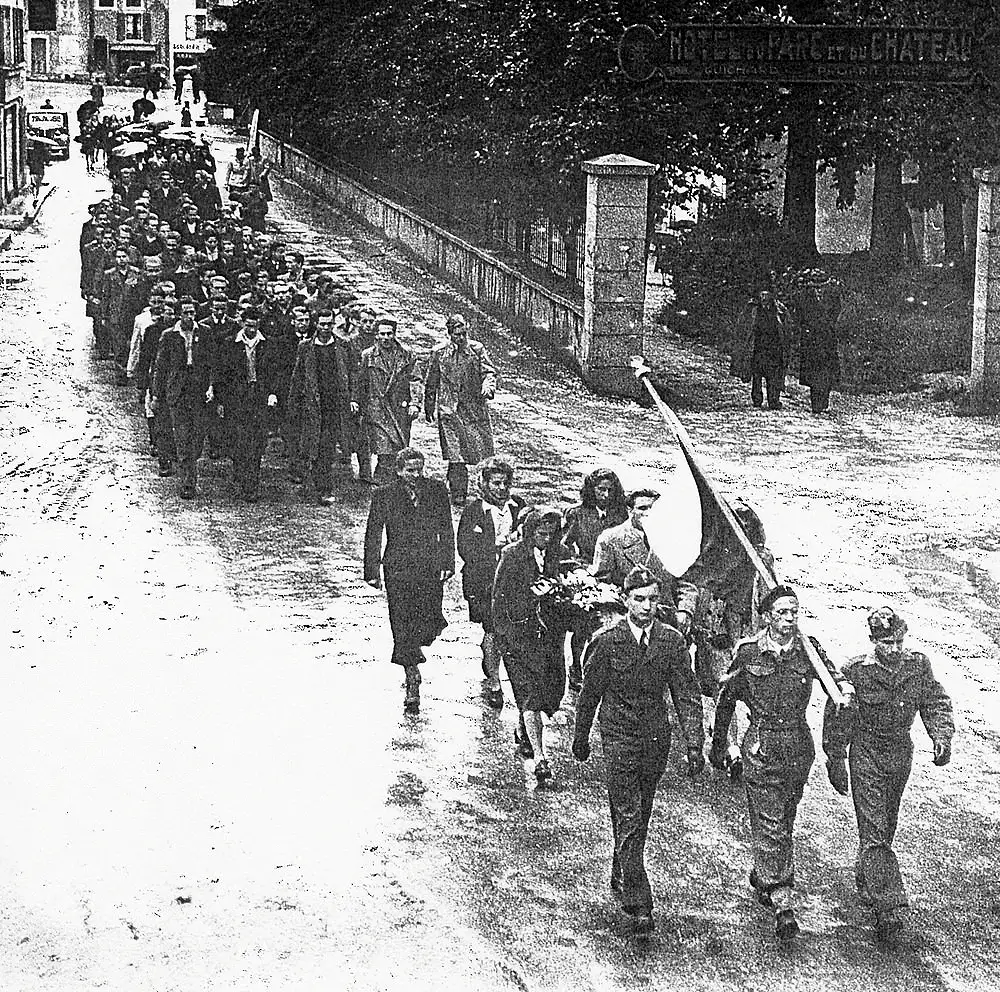
In this end-of-an-era atmosphere, the reaction of all of us, students and teachers, was to work all the harder in all subjects, to ask more questions, to discuss and explore the answers, in short, to make the most of the time we had left to work together. Our participation in national, religious and local festivals was all the more important and appreciated by the people of Villard.
It was already clear that the days of the Villard high school, which had been steeped in deep Polish and Western traditions since 1940, were numbered, as the passive resistance of the entire teaching staff and almost all the students could not accommodate this imposed ideology. This resistance was in no way comparable to that in occupied Poland. It was more like a bunch of school children playing practical jokes on a hated teacher and his few accomplices, but we still managed to make life impossible for him until the end of June 1946. That said, peasant types generally have thick skins…