
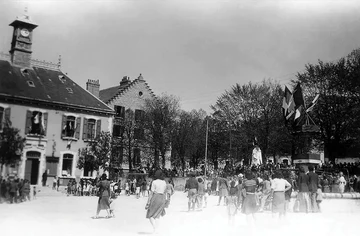
7.1.1 “A school for the children of the “old” emigration.”
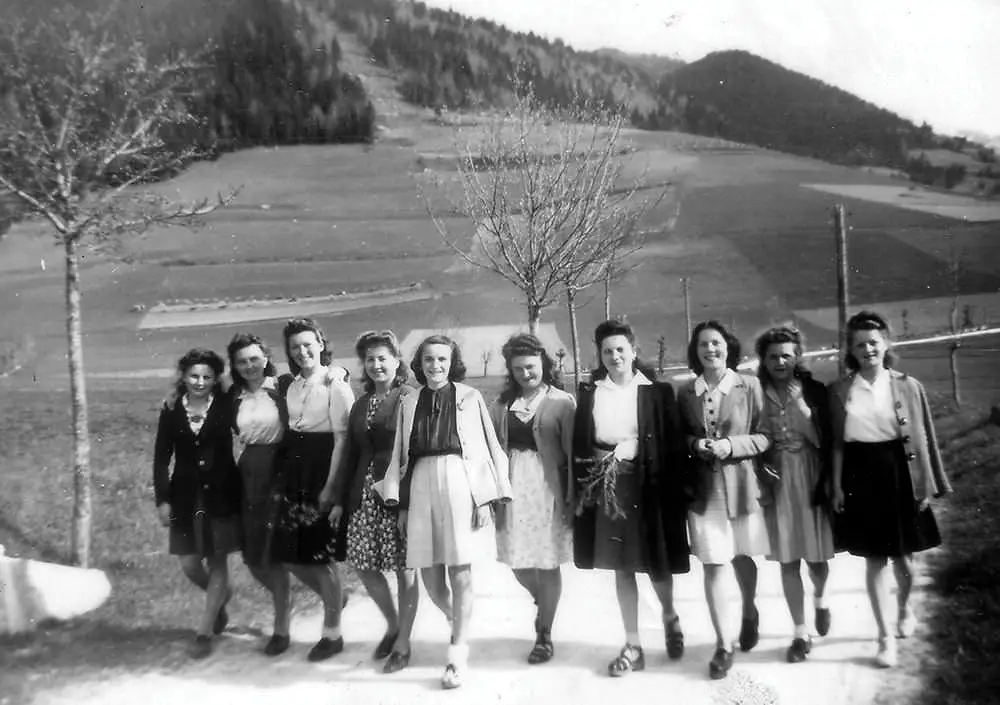
—Tadeusz Łepkowski, student. A free Polish school in occupied France (2012), based on Wolna szkoła polska w okupowanej francji (1990).
There can be no doubt that the Cyprian Norwid high school was now a school for the children of the “old” emigrants, who made up three quarters of the younger-than-ever enrolment. The students, who found themselves immersed in the noisy and practically bilingual Polish environment of Villard, where a very particular mixed idiom had developed, lived and studied in difficult conditions. Boarding rooms were overcrowded and hygiene was poor, due in particular to a lack of good quality soap. The food, even from the farm where the students continued to work, was still inadequate. As for the rules and the way of life, they differed little from previous years, apart from one important point: in the bedrooms, classrooms, corridors and even in the street, the students had an excessive tendency to speak French amongst themselves, or a mixture of Polish and French.
There were many comments from teachers about the significant linguistic shortcomings of the junior high school students. This illustrates the huge amount of work teachers did to revive the Polish language among young people from old emigration backgrounds. The vast majority took their studies very seriously and fully appreciated the opportunity to study in a Polish environment. They respected their teachers, although the distance between them was greater than it had been in the “old Villard” . The school was becoming normalised, losing its former character of community, of universitas. Even breaches of the rules, pranks and jokes were more often than not childish in nature.
Religious practice, which was beginning to lack a patriotic foundation, weakened somewhat. The choir, still directed by Berger, had lost its best soloists, although some former members who were studying in Grenoble after the baccalaureate returned to sing with the group. This collective singing and the dance evenings were very popular, but this was no longer the case for cultural activities and theatrical performances.