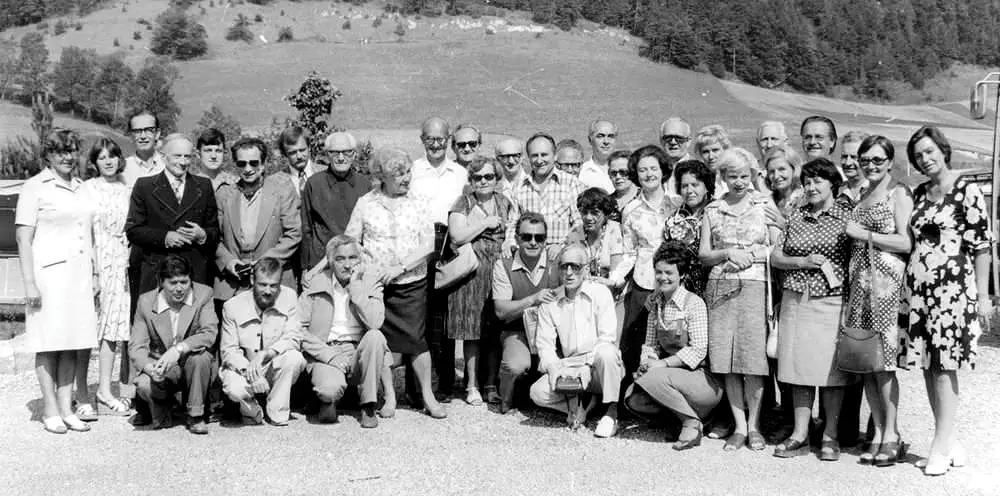
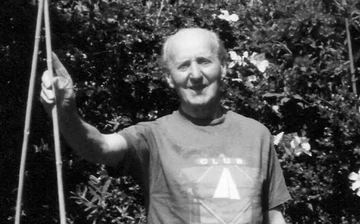
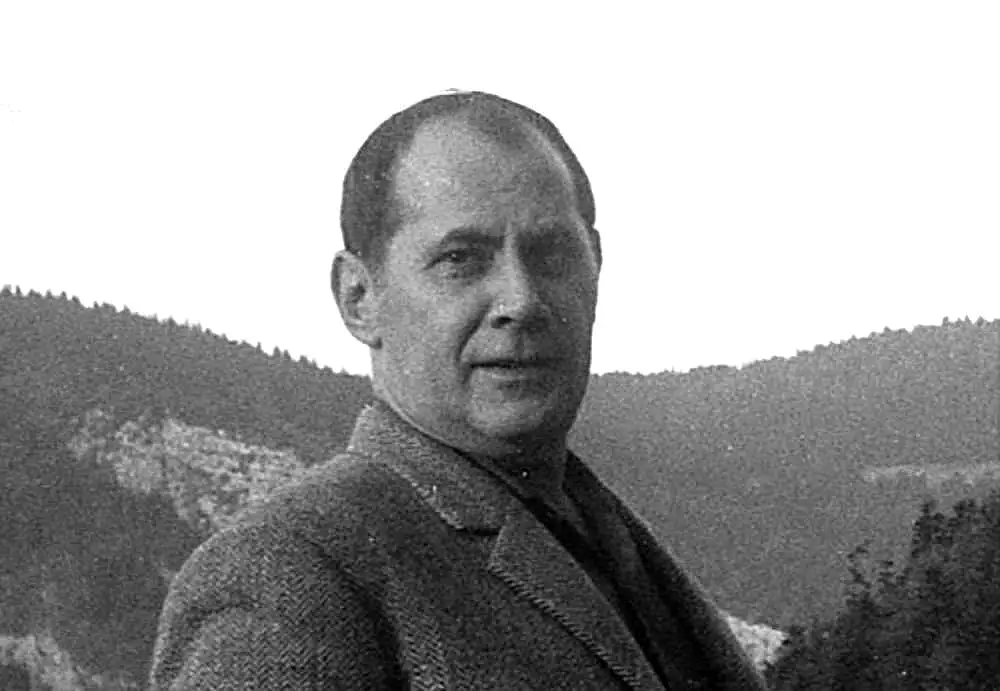
The high school gave its students – rising above their differences – an open civic and patriotic awareness, in which love of country went hand in hand with an understanding of other peoples, and in particular of the French people who had welcomed emigrants in the past and refugees more recently.
Did the Villardians continue their education and, if so, in what field? What professions did they go on to practise, and in what sectors? A letter sent by Lech Zarzycki to Marcel Malbos in the spring of 1955 constitutes an ardent defence of the new Polish reality: “I am very happy with the people ‘s democracy regime, which I find much more moral and fairer than the capitalist parliamentary republic. There ‘s no poverty here, no prostitution, no unemployment, everyone works.” We learn about the professional success of Villardians, both teachers and students. Władysław Wicha is the highest-ranking of all the alumni, being Poland ‘s Minister of the Interior; six other former Villardians teach in secondary schools; Ernest Berger runs a cultural centre (” and a choir, of course” ); three alumni are engineers; Ewa Valentin is the director of a river port and Jadwiga Siebeneichen an economist; several other alumni have embarked on literary or artistic careers; and Małgorzata Berger is a member of a voivodship people ‘s council.
Taking a more objective view than Zarzycki ‘s, which is essentially propaganda-inspired, one would have to recognise that Norwid’s alumni, whether they obtained their baccalaureate or not, have worked in a wide variety of professions.
Relatively few of them were involved in political or public activity in Poland. Around twenty were members of the Party, but later broke with it. Most former Villardians were somewhat opposed to the regime, and some were even persecuted by it. In 1950, Józef Węgrzyn (see his story in 6.2.4 – NDA) was imprisoned for spying for Franco ‘s Spain; rehabilitated after 1956, he left Poland to settle in France. There were a number of alumni from the Cyprian Norwid high school in the ranks of the Solidarity movement and among the union activists (including Lepkowski himself, who played a senior role – NDA).
In France, very few joined Polish political organisations linked to the so-called “London” government. However, special mention should be made of Zaleski, who maintained close relations with the authorities of the aforementioned government and who, as an eminent figure in Polish literature and culture, enjoyed immense moral and intellectual authority. Godlewski, who taught at the University of Lille and did a lot of teaching for Poles in France and French friends of Poland, also acquired a high scientific and moral standing.
When one thinks of particularly successful Villardians, the names that come to mind first are those of around fifteen academics and researchers, that include former teachers at the school. Historians make up the largest group of former students. However, universities and research were not the only fields in which Villardians distinguished themselves: in France, there were great lawyers like Bolesław Szpiega, or engineers like Aleksander Metelski, one of the designers of Concorde; in Poland, the eminent translator and literary critic Jerzy Lisowski, or the civil engineer Kazimierz Dębski.
The list could be continued, at the risk of it being tainted by subjectivity. Let us conclude with this simple observation: the vast majority of Villardians were good, honest workers throughout their lives, whatever position they held or recognition they earned. Few of them went astray or fell into alcoholism, while the majority achieved a social position that enabled them to live comfortably – needless to say that, for the most part, this refers to Villardians that settled in the West.