—Tadeusz Wojciechowski, student. Our school, 2017, after Nasza Szkola, 1998.
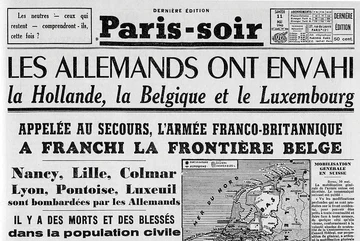
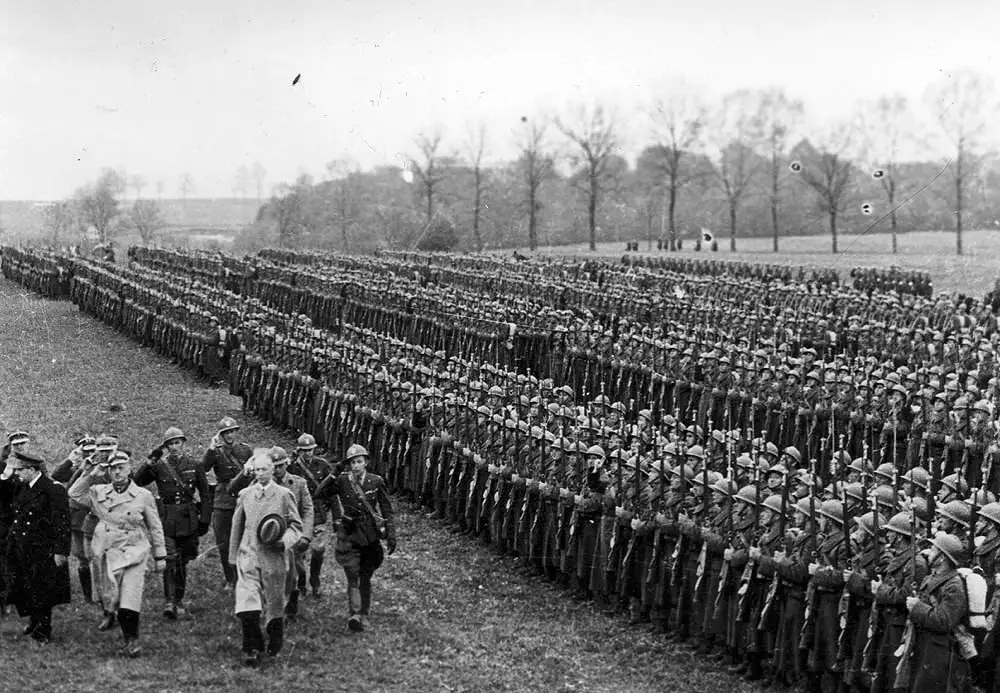
In Coëtquidan, I was posted to the Third Battalion of the First Grenadier Division of the Polish Army, which was reforming at that time. Intensive manoeuvres took place. When the Germans attacked Belgium and the Netherlands and entered France, our two Polish divisions were sent to Alsace and Lorraine.
On 16 April 1940, the First Grenadier Division was transferred to the front line in Lorraine, south-east of Nancy. On 16 May 1940, my Third Battalion was moved to Lunéville. On 6 June, in good order, we began a march to occupy our positions. In three nights, we covered a hundred kilometres. We often passed areas that had been abandoned, their inhabitants having fled from the Germans. Our mission was to defend the Altviller-Domfessel line. The front on the Marne had been breached and the rear of the French army was threatened. We received orders to withdraw to the line of the Marne-Rhine canal and to attack. A long and violent battle ensued. The enemy approached the canal and tried to cross it. The terrain was in their favour, but the Polish fire forced them to retreat. One of the bloodiest battles took place in the Lagarde region, with a high concentration of machine guns and armoured units. There was also fighting near Montigny and La Trouche, but the encirclement of the French army made further fighting pointless. Our division’s losses amounted to 900 dead, 2,800 wounded and 1,500 missing.
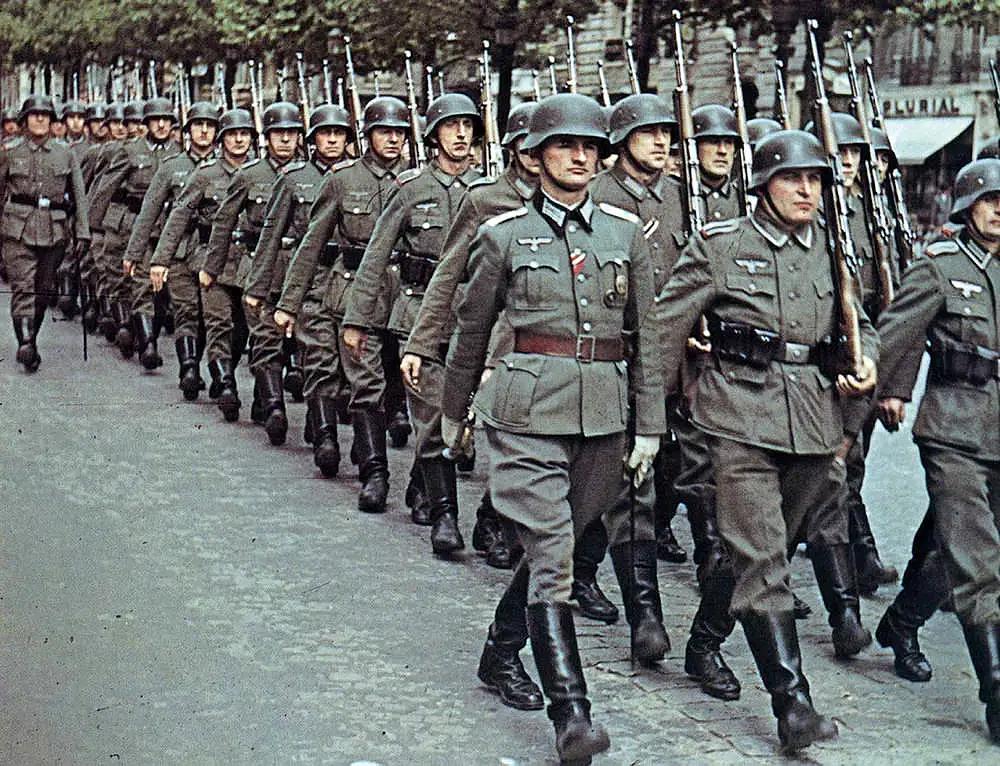
The survivors went on to Switzerland, Spain, and many to England, but the majority were taken prisoner by the Germans at Saint-Dié on 22 June 1940. German soldiers armed with machine guns led us in an endless column of unarmed soldiers, most of them French, from Saint-Dié to Strasbourg. Our march lasted several days, during which the Germans left us without food. The French supported us a little by leaving food and buckets of water by the roadside. The German soldiers would knock them over or shoot holes in them. We were crammed into barracks in Strasbourg, then into Stalag 7A near Magdeburg. Underfed, I fell ill and I would not have survived long in those conditions, but luckily I had given an address in Nice as my home address. As a result, by decision of a Franco-German medical commission, I was sent back to the south of France, to the free zone, at the end of June 1941, after a year ‘s detention.