4.4.1 “ To the delight of the guests.”
—Tadeusz Łepkowski, student. A free Polish school in occupied France (2012), based on Wolna szkoła polska w okupowanej francji (1990).
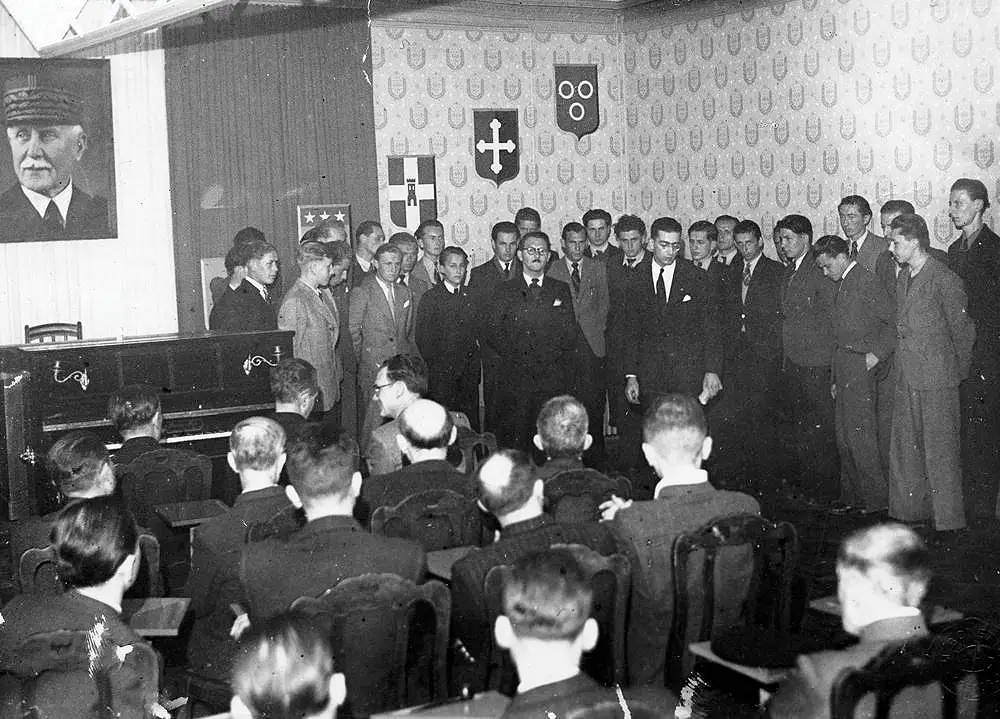
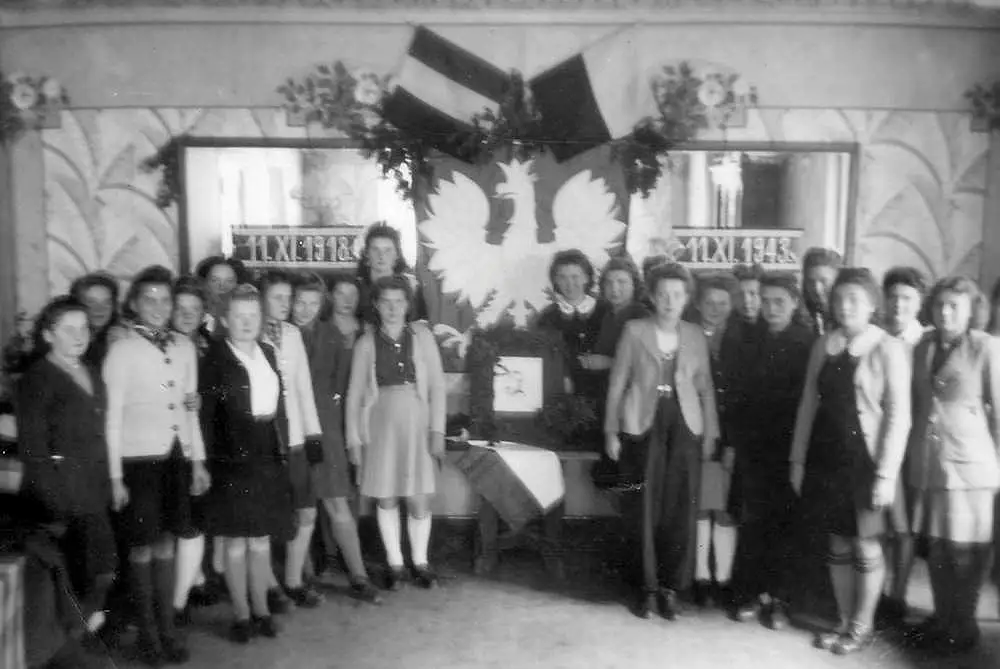
The programme for the many ceremonies organised in Villard and Lans often included declamations of poems from the romantic repertoire, as well as contemporary patriotic works, which were very popular with the students. Ceremonies usually began with a speech, followed by presentations and talks. Some of the speeches were memorable! The school choir was always present, much to the delight of the students and teachers, and the Polish and French guests.
From time to time, usually in the evening, Zaleski would give a Chopin recital in the Hôtel du Parc’s large dining room. Sometimes, he preferred to play alone, for himself, but the students would slip silently into the hall, barefoot, listening reverently to Chopin’s music. According to one of them, “He would continue to play until he realised he was surrounded by students, at which point he would flee.”
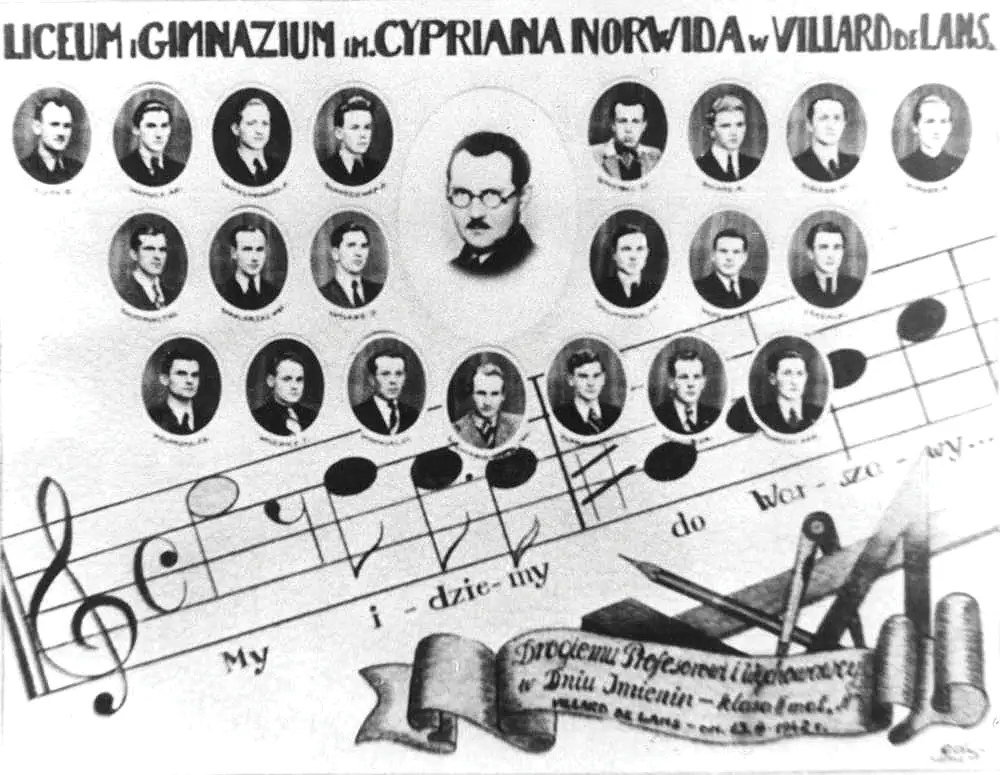
While Chopin was heard from time to time, simple songs were omnipresent in the boarding facilities, and at break times, on walks and on the way to school. People sang, a cappella or accompanied by instruments, of which there were not many (the harmonica, or more rarely the accordion or guitar), solo or, more often, as a choir, in several voices. The national anthems of the three countries were sung, as well as military songs and marches, but also opera and operetta arias, popular songs, scout songs and hits from the inter-war period (waltzes, tangos, etc.).
Several teachers, including Jadwiga Stefanowicz and Godlewski himself, infected the students, without any difficulty whatsoever, with the “virus” of the dramatic arts. Jadwiga Stefanowicz ran the theatre club, while Zofia Łukasiewicz managed to find costumes. As for the sets, they were generally made by the students themselves. The rehearsals produced the most intense feelings, giving the young actors plenty of food for thought and discussion. The results were remarkable. Fredro ‘s The Revenge and Żeromski ‘s Whiter than Snow Shall I Be deserve a special mention, as these two shows were so well received that some of Grenoble ‘s society figures travelled to see them.
In 1942, a collective effort led to the creation of the satirical opera Straszny Sąd [The Phantom Judgement], some passages of which remained popular throughout the school ‘s existence. The plot was as follows: teachers consider, to the amusement of the spectators, whether an unfortunate deceased student should go to heaven or hell. So it was that Kazimierz Gerhardt, depicted as a judge with a dove ‘s heart, would sing: His tears are flowing / H2SO4 / Base and acid / We must welcome him / Alleviate his torments / Let him stay here. Meanwhile the interested party described the situation in these terms: Hell is everywhere where youth is not / Tears and despair are signs of old age / So come with me, oh my brothers / Over there, to the old country on earth / To Villard, eternal paradise / Where the spring air is fragrant / Where May bursts into bloom.
It was a sort of joyful ode to youth, to “young Villard” .
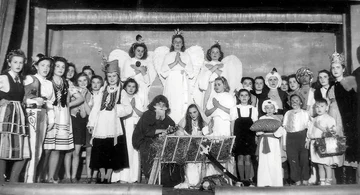
The traditional Polish nativity scene, and more specifically the tableau vivant of “The Baby Jesus in the Manger” , performed in Polish at the Hôtel du Parc and in French at the Rex cinema, was a part of both the school ‘s theatrical and religious history. The text, which was actually more patriotic and military than religious, was written by Hilary Bakalarski and (freely) translated into French by Philippe Blanc. The music was by Ernest Berger, the choir obviously being part of the show. The sets and staging were by the engineer Aleksander Łabęcki, while Stanisław Sadowski and Wacław Binental took care of the technical side. There were nineteen students on the stage. Both performances drew large audiences, Polish and French, who warmly applauded the artists.