4.1.1 “A form of private life developed in our rooms.”
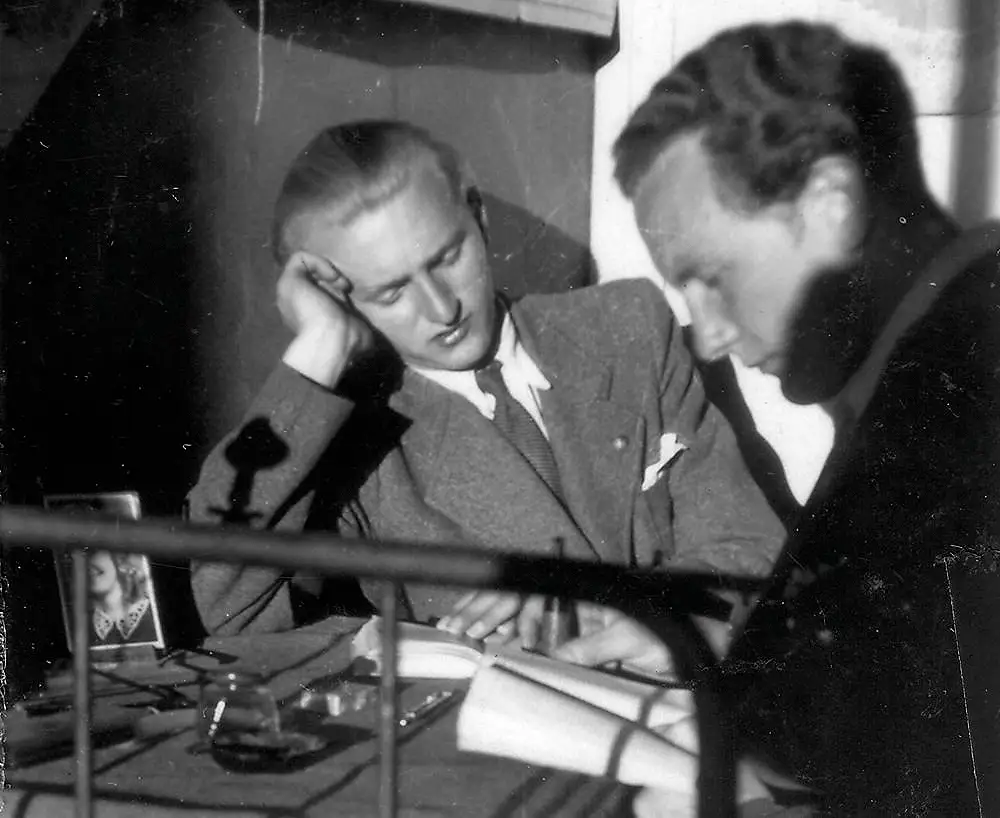
—Adam Skinder, student. Our School, 2017, based on Mój Villard de Lans, 1978.
A gathering that was so diverse in terms of social, intellectual, religious and generational characteristics, brought together in such a concentrated environment, has probably never existed in the Polish diaspora, or even in Poland. But we formed a genuine society!
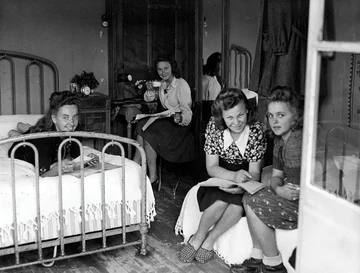
We were one big family. But, as in any big family, everyone had their own particular way of doing things. A form of private life developed in our rooms. We were grouped together according to our requests, often linked to previous friendships. Mine was my home for almost a year and a half. I was the only one to stay for so long. The other occupants changed…
There was the sweet and friendly Leon B. Although born and educated in France, he spoke very good Polish, but would occasionally mix in a few French words, especially when he was overcome by emotion. He devoured everything related to Poland, listening passionately to our stories about the homeland and the fighting, and shared all the parcels he received from home. After the war, he worked at the Polish consulate in Lyon and was active in the Polish National Liberation Committee.
There was the unforgettable Jasio P., a would-be poet from Podolia. He came from a poor family of farmers. He found himself in Villard by chance, transported by the whirlwind of war. Back home, he had not been able to continue his studies and he threw himself into them with a passion. He absorbed everything he could, but found it hard to systematise and assimilate. Contaminated by the germ of poetry, he became a rhymester, and nothing – our attempts to dissuade him, Mr Wacek ‘s arguments, or the taunting -could divert him from this path.
Then there was Jasio W. Much older than us, he had worked at the consulate in Lille, where he had met the teachers Harwas and Godlewski. He was the embodiment of pedantry and also richly endowed with articles that we lacked. He was an excellent room-mate whom everyone envied, especially for his constant supply of tobacco. He liked to chat, but kept a discreet distance.
Artur J., whom we called Turek, was in the room next door. A former student of the Rawicz Cadet School, he was a war invalid and, despite the sword of Damocles represented by an inoperable piece of shrapnel embedded near his heart, he sparkled with a humour that was sometimes tinged with sarcasm. An inveterate smoker and bridge player, he was a comrade you could always count on.
We shared joys and sorrows and helped each other out. A cooperative was set up to help fellow students who were having difficulty in a particular subject. For a modest contribution of a few cigarettes, they could obtain compositions or explanations. However, the Cooperative did not last long; its failure was inevitable, because knowledge can really only be acquired through personal effort.
A Universal Totalizer was briefly created, but we never really knew what it meant.
All kinds of other circles of interest were formed. There were fierce discussions, often ending in sulks lasting several days, after which harmony reigned again. Nothing very unusual!
Among the literary crowd, the debate was led by the arbiter of elegance, Romek Długosz. There were endless discussions, usually when the weather didn ‘t lend itself to the walks that Romek also presided over. Romek composed music. Initially, he came with a guitar and listened to me play the violin in my room. Later, we formed a trio with Romek Gajewski on accordion. We played medleys from memory, as there were no scores: classical or light music, jazz and even improvisations. Unforgettable times.
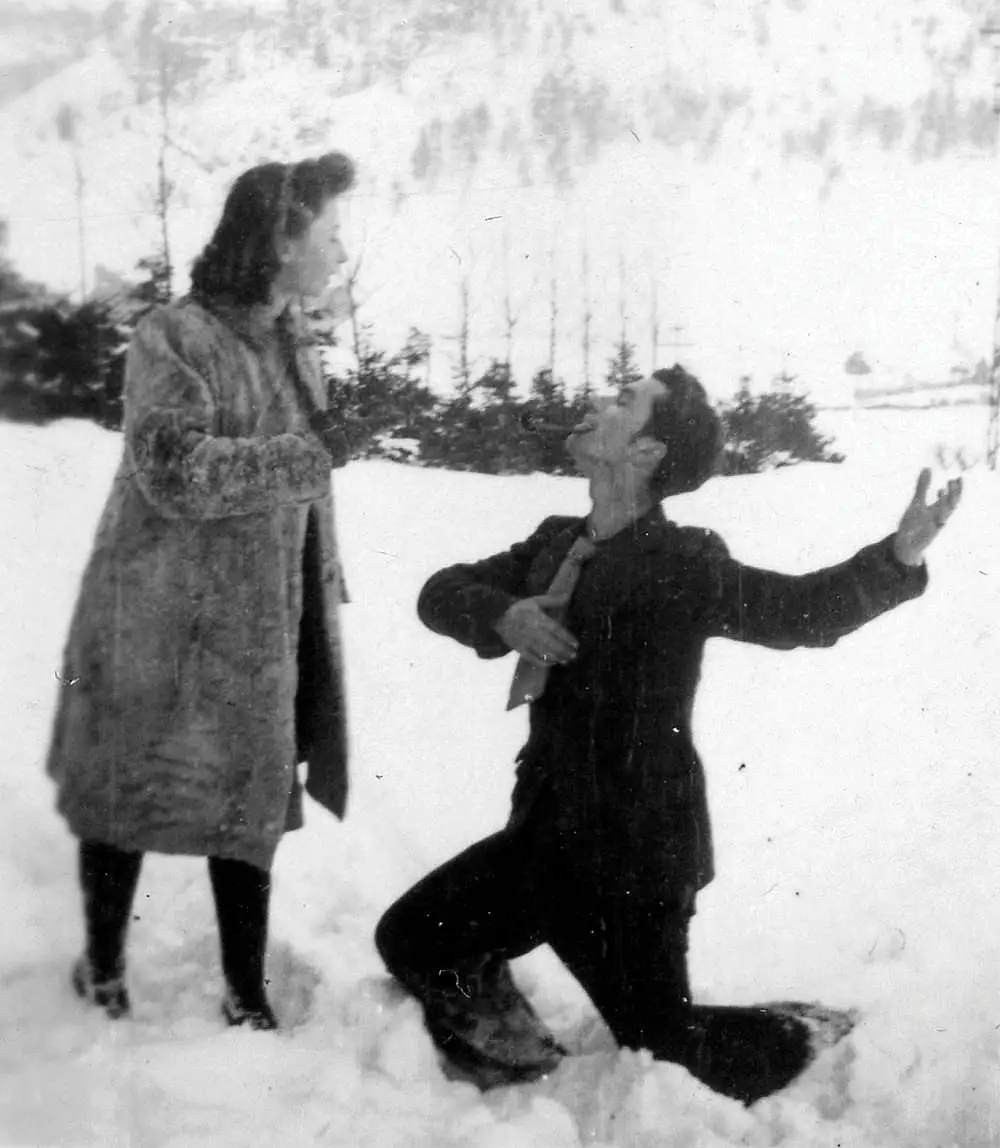
In small groups, in our rooms, we sometimes hummed military songs. Not the resigned kind, but rather joyful ones or love songs. Władek K. took the lead. He was something of a Gavroche from Warsaw, a newspaper seller, he told me when I met him.
We were still painfully marked by the absence of everything that was dear to us, and the more we thought about it, the more that “everything” became dear to us. Our nostalgia was soothed by the beauty of the surrounding mountains. Happy were those who occasionally received some news from their distant homes! We sought ways to get in touch with our families, through the Polish Red Cross or various charitable associations. We questioned new arrivals.
But mostly, there was a studious atmosphere and a thirst for learning.